Docker Changed Their Brand and It's OK
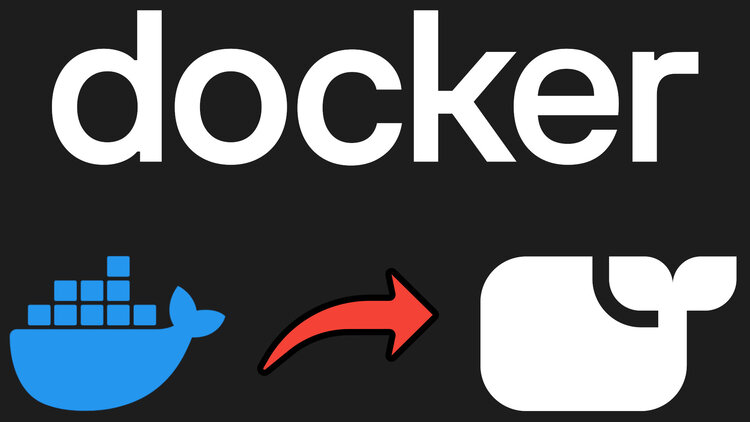
Docker is still Docker at the enf the day, but now there's a stronger focus on system level containment for running agentic workflows.
Docker has changed quite a bit over the years, here’s an evolution of their logos:
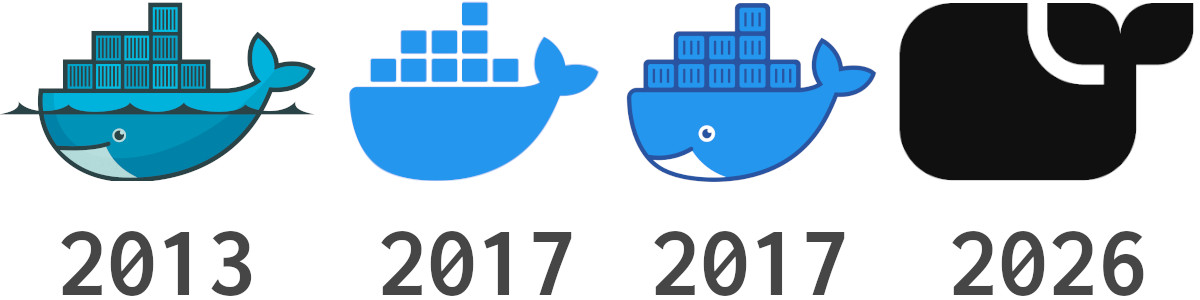
Sources:
- 2013: https://www.docker.com/blog/call-me-moby-dock/
- 2017: I can’t find official sources for this but I have blog posts from 2017
where I used these logos, so they may have existed since then
- I know for sure the 2D one was released in 2017 since I found old Slack messages
- The cartoon one might be either 2017 or 2019, I can’t say for sure, I only see a Slack message in the Docker Captain’s channel from 2019 but I also have it used in blog posts from 2017 so I’m not 100% on this, sorry!
- 2026: https://www.docker.com/blog/meet-the-new-docker-built-to-run-on-trust/
# The Early Years
Back in 2017 I wrote about when Docker spun off the Moby project. I remember back then this caused a lot of confusion, especially with how they did versioning and CE vs EE, and then again in 2019 when Mirantis acquired Docker’s Enterprise Edition team.
I would say 2019 was a pivotal time for Docker. They switched to going all-in on the development experience and I think they did really well. Docker Desktop has gotten infinitely better since then. Docker Compose is also the best its ever been in my opinion.
Having used Docker since late 2014 and being a Docker Captain about a year later I’ve seen all of these changes first hand as they unfolded, both behind the scenes in internal Docker meetings and in the public.
# November 2026’s Brand Switch
Docker posted about it on their blog but this is something they collaborated with internally to Docker Captains about a month before.
There were mixed reactions. Some folks think it’s a great idea, others are worried it might alienate Docker’s core audience that have been around for 10+ years.
In case you didn’t read the above blog post, Docker is now laser focused on the idea of trust and containment in a world of AI agents. This came with a legit brand adjustment. There’s a new logo, a completely redesigned website, a new documentation site and an updated mission with a north star around making sure Docker is well positioned to run agentic workflows safely both on your local machine on the cloud with Docker Sandbox.
Containing Apps vs Agents
The good news is, containers are still a part of “containment”, it’s just a different level of containment. We all know by now that containers are excellent at isolating processes, such as running your web app’s server, a background worker or a database.
But agents are different. They could have potentially more access to your system and a container isn’t quite the right fit but Docker Sandbox is, which behind the scenes is a micro VM. It has its own kernel and doesn’t depend on using Docker in Docker. It’s super light weight and efficient.
I’m certainly going to be making more posts and videos about Docker Sandbox in the future but a really important takeaway is that containers are not going away. This isn’t a “containers are trash and micro VMs are the new thing” case at all.
Docker is still going to promote using containers to isolate workloads we’ve all been running in containers for 10+ years, but now Docker is introducing and iterating on tools to provide system level isolation. Think of it as an expansion of options instead of a replacement.
New Logo
With the above in mind, Docker felt like it was a good time to change their look and feel.
I mean, this is my opinion entirely but I’m not crazy about the new logo. My first impression is it looks very similar to Apple’s logo and I think they missed an opportunity to keep “containers” more apparent.
I really liked the 2017 era logo, both the cartoon style and 2D style. It was super recognizable as a whale and had a fun / unique feel to it. The idea of containers and isolation was heavily baked into the logo. It was recognizable and a mascot.
The new logo looks ultra minimal / corporate and is harder to recognize as a whale, especially at smaller sizes. I think people who don’t already know about Docker will have a harder time seeing a whale at first. It’s like one of those “once you see it, you see it” type of designs like picking out the arrow in the FedEx logo.
At the end of the day, I’ll accept it for what it is because there is no other choice. I’m not a graphic designer and maybe nostalgia is biasing my decision because it’s no longer what I’m used to. However, over my lifetime I’ve learned to trust my gut decisions and my gut says may Moby rest in peace.
Plus now I have around a dozen out of date Docker shirts haha, but Docker is awesome with swag. I’m sure a new line of shirts and merch is on the horizon.
Site Redesign and Docs
I’ll be honest with you, I rarely pay attention to a tech site’s home page. For example, when was the last time you looked at GitHub’s home page while not logged in? For me, it’s been about a decade.
When I’m interested in using a new tool or service, I’m not interested in graphics or marketing copy. I want to quickly know what the thing does and how much it costs. The faster I can get this information, the happier I am. Everything else is on the back burner for me.
Usually this means looking very quickly for the pricing page, maybe a FAQ and the documentation / guides. I’ll also look for 3rd party blog posts and videos to learn more about a tool because I trust an unbiased source over the original site. I don’t think every company is evil but more than not, there’s a lot of marketing fluff and I’m more a “let’s just get down to business” type of person.
I’m not saying Docker’s new home page is all fluff, I’m just not the target audience for reading that level of copy.
With that said, I can’t say whether or not I like the new home page more or less. I can’t really remember what it looked like before because I spend 99% of my time looking at the docs.
On that note, I like the new docs site a lot. Once you understand “Application development” has all of the tools you’re used to using, it’s easy to find what you’re looking for. Each one is clearly labeled and it’s easy to bounce around between sections.
The same can be said for the AI focused tools too.
Think about how Docker’s ecosystem has changed over the years. The old design was fine for a long time but as more and more tools and ideas come into play, it makes sense to segment things off into individual sections like they’ve done now. It’s a natural evolution in my opinion.
The reference docs for the CLI, Dockerfile and Compose file are all available too.
# To AI or Not to AI
If you don’t care about agentic workflows or AI, that’s ok. Docker is still going to continue developing and improving all of the Docker related tools you’ve used in the past.
Also, Docker Sandboxes is not hard locked into AI. It’s a micro VM. You can run a shell without any pre-installed agents and do whatever you want in there. You may find using this to be valuable for other use cases.
If you come at it from that perspective, you’re getting something new to optionally leverage at your discretion, and you can let your eyes glaze over all of the new AI / agentic marketing.
On that note, if you do care about running agents safely in a way where you have very high confidence you’re not going to leak credentials or have your file system compromised or affected in an unattended away then you’re in safe hands with Docker.
Personally I’m optimistic about this brand shift. It’s publicly letting the world know Docker is committed to more than container / process isolation. Whether we like it or not, AI is something that’s gaining more and more popularity so being positioned as a world class solution for running agentic workflows is a good spot to be in.
Over the years I’ve learned not to treat everything as black or white, or 0% vs 100%. There is plenty of room in the middle. If you don’t like something about the new direction, you can still use Docker and be happy about it. If I see the creator of the logo again at a Docker event, I will still be friends with them!
The video below covers the above.
# Demo Video
Timestamps
- 0:39 – Docker’s previous rebrands
- 2:54 – The recent brand switch
- 3:51 – Containing apps vs agents
- 5:03 – The new logo
- 7:02 – The new site
- 8:17 – The new docs
- 9:50 – To AI or not to AI
How do you feel about the new brand shift?